
What Is Hyperliquid (HYPE), the project everyone’s talking about?
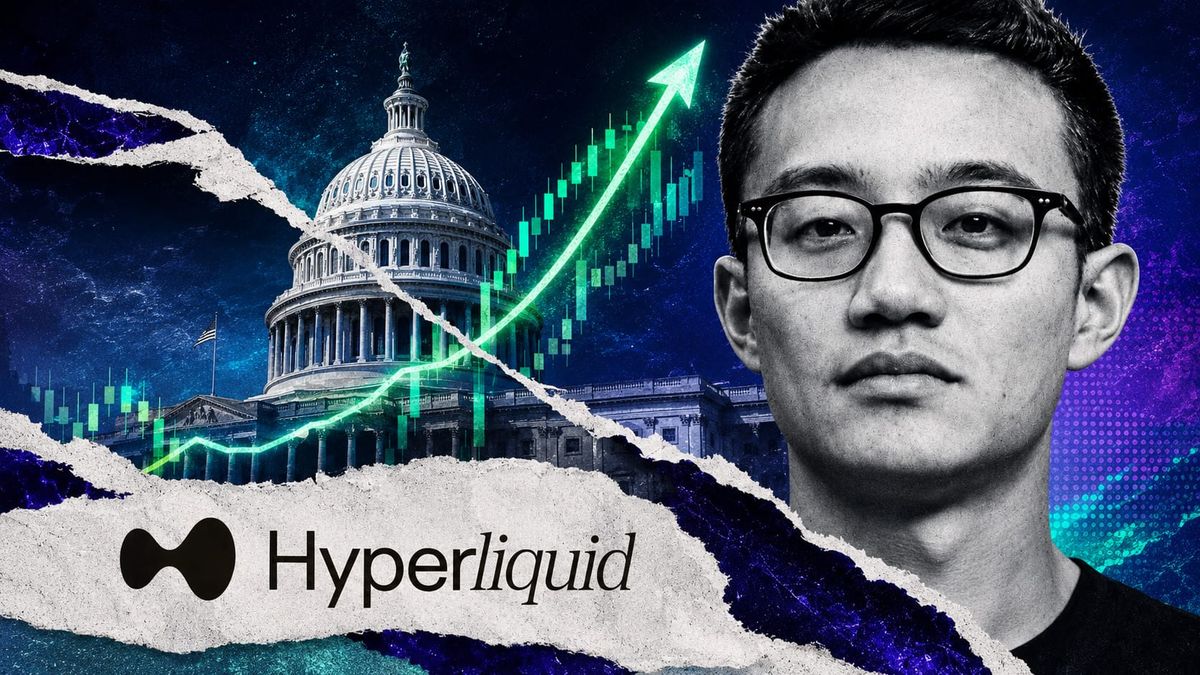
What Hyperliquid actually is, who’s behind it, why it’s built differently from every other DEX, and what happened over the past eight months to put the HYPE token back in the spotlight.
Intro
People still call Hyperliquid “just another decentralized exchange.” Technically that’s true, but it no longer covers it. As of mid-May 2026, Hyperliquid is:
- a layer-1 blockchain (L1) with its own consensus and architecture;
- the clear leader in the perp DEX market, holding a 45–70% share (depending on the week) and most of the open interest;
- an EVM-compatible smart-contract environment with dozens of DeFi apps and infrastructure projects already built on top of it;
- a venue where people trade not only crypto but synthetic derivatives on oil, gold, the S&P 500, and pre-IPO names like SpaceX, OpenAI, and Anthropic;
- the issuer of the HYPE token, which just printed a new all-time high and passed Solana on fully diluted valuation. It’s up more than 170% since January.
And all of it was built by a team of 11 people — with zero venture money, no presale, and no allocations to market makers or centralized exchanges.
The real question isn’t whether you should buy HYPE. It’s deeper than that: is Hyperliquid just a successful DEX that caught a strong cycle, or an early version of a new kind of financial plumbing, where the exchange lives directly inside the blockchain?
❗️ALL CRYPTO NEWS: CRYPTO HEADLINES
Chapter 1. Who Built Hyperliquid
Jeff Yan: physicist, quant trader, market maker
The public face of the project is Jeff Yan (on X: @chameleon_jeff). He grew up in Palo Alto, California, in a family of immigrants from China. In high school he was serious about physics: silver at the International Physics Olympiad in 2012, gold in 2013. From there it was Harvard — a bachelor’s in math, a master’s in computer science, class of 2017.
Right out of Harvard, Yan landed at Hudson River Trading, one of the most secretive high-frequency trading firms in the world, where he wrote low-latency algorithms for U.S. equities. That’s about the toughest training ground in high-frequency trading there is.
In 2018 he left Hudson River Trading and tried to launch an L2 platform for prediction markets called Deaux. It didn’t take off — users weren’t ready for it, and there were regulatory questions on top. So Yan moved to Puerto Rico (lighter taxes and friendlier rules for traders) and founded Chameleon Trading, an anonymous crypto market maker. Over a few years the firm grew thousands of percent on pure math — no hype, no public profile.
Co-founder iliensinc and a team of 11
Hyperliquid’s co-founder is known publicly only by the handle iliensinc. He’s a Harvard classmate of Yan’s, and he doesn’t reveal his real name.
The core team is 11 people. According to PANews and public profiles, it includes folks from Citadel, Jane Street, MIT, and Caltech. Nobody came out of the 2017–2021 crypto-hype crowd. They’re all from traditional trading and quant research.
The turning point: the collapse of FTX
The trigger that gave birth to Hyperliquid was FTX blowing up in November 2022. As Yan has put it on podcasts — and as CoinDesk recaps in its December 2025 piece “Most Influential: Jeff Yan” — while traders were fleeing the wreckage of centralized exchanges, he saw the demand for a decentralized alternative where users hold their own money.
Yan wound down the Chameleon Trading team and went all-in on Hyperliquid. The legal entity is Hyperliquid Labs. The company now operates out of Singapore (the team moved there in spring 2024, where the regulatory climate is calmer).
No VC, on principle
This is probably the most unusual detail in the whole story. Hyperliquid never took a single cent of venture money. In Yan’s own words, he turned down offers worth more than $25 million because he sees big VC ownership stakes as a “scar on the network” that gets in the way of long-term growth. Phemex Academy puts it even more bluntly: Yan walked away from offers that valued the project “in the billions.”
The entire project was funded out of Chameleon Trading’s profits. This is worth understanding: when you look at the HYPE token distribution and don’t see a line item for “investors,” that’s not a marketing trick. There really aren’t any.
Chapter 2. Timeline: From a Quiet Launch to a Top-10 Market Cap
2022. Hyperliquid Labs is founded; development begins. No hype, no press releases.
Summer–fall 2023. Mainnet launches with a points system. Points are a way to reward users for activity before a token exists: you trade, you provide volume, you rack up points that may later convert into something. Hyperliquid’s scheme had no published formula — every Friday, iliensinc handed out points by hand, and the community spun up theories about exactly how they were calculated.
October 2024. Daily perps volume tops $1 billion. That’s a serious number — more than many DEXs were doing in a full week back then.
November 29, 2024 — the Genesis Event. The HYPE token launches alongside an airdrop that many call the biggest in crypto history by real value received. 310 million HYPE (31% of supply) went out to roughly 94,000 wallets. The average drop was around $45,000. The single largest was $9.56 million. The price on day one was about $2–7; a few days later it was $9–10.
December 30, 2024. Native HYPE staking goes live.
February 18, 2025. HyperEVM launches — an EVM-compatible environment on the same chain. This is a pivot point: until now Hyperliquid was just an exchange; now it’s a platform you can build DeFi apps on.
March 26, 2025 — the JELLY incident. The most controversial episode in the project’s history. We break it down in detail below.
July 5, 2025. CoreWriter launches — now HyperEVM smart contracts can write data into HyperCore (the exchange engine). This removes one of the key roadblocks for DeFi built on Hyperliquid.
September 14, 2025. Validators picked Native Markets to operate the native stablecoin USDH, beating out Paxos, Ethena, Frax, and Agora.
September 18, 2025. HYPE hits an all-time high of $59.30 (the exact figure per CoinGecko; $59.37 on Coinbase).
October 13, 2025. HIP-3 launches — permissionless perp markets. From this point on, outside teams can spin up their own markets on Hyperliquid’s infrastructure. This turns the project from an exchange into an infrastructure layer.
November 29 / December 3, 2025. The main token unlock for core team members begins (about 24% of supply, released gradually through December 2028). A lot of people braced for a crash. It didn’t come.
February 2, 2026. Announcement of HIP-4 — outcome contracts (prediction markets).
February 4, 2026. Integration with Ripple Prime — institutional prime brokerage.
March 2026. Open interest on HIP-3 markets (stocks, oil, gold) tops $1.2 billion.
May 2, 2026. HIP-4 goes live on mainnet.
May 12, 2026. 21Shares launches a spot HYPE ETF (ticker THYP) on Nasdaq.
May 14, 2026. The Coinbase and Circle deal — AQAv2. Coinbase becomes the official “treasury partner” for USDC on Hyperliquid and shares reserve yield with the protocol. USDH starts winding down.
May 15, 2026. Bitwise launches a spot HYPE ETF (ticker BHYP) on the NYSE. The same day, CME Group and ICE (the NYSE’s parent) petition the CFTC for tough oversight of Hyperliquid.
May 18, 2026. Trade.xyz launches a synthetic perp on SpaceX stock (ticker SPCX) at a reference valuation of $1.78 trillion. Ventuals launches markets on OpenAI and Anthropic in parallel. HYPE is up 7% on the day while BTC is falling.
May 19, 2026. Bloomberg reports that the SEC is preparing an “innovation exemption” for tokenized stocks. HYPE rises again.
May 20–21, 2026. Price around $48–52, market cap $12.4 billion, FDV around $50 billion.
Chapter 3. The Tech: What Makes Hyperliquid Different
To understand why Hyperliquid pulled off what its competitors couldn’t, you have to get the architecture. I’ll keep the jargon out of it.
Why it needed its own blockchain at all
For AMM-style swaps (think Uniswap), blockchain speed doesn’t really matter. You can swap a token in 12 seconds or in a minute — not a big deal either way.
For an exchange with an order book, it’s a whole different story. An order book is the list of bids and asks: who’s willing to buy, who’s willing to sell, at what price, for how much. For that to work properly you need fast order cancellations, frequent price updates, instant liquidations, and an exact ordering of trades. Even a one-second delay scares off the pros — too many openings for arbitrage against their positions.
So Hyperliquid took the harder road: it built its own L1 from scratch. Every design choice serves one goal — trading.
The three architectural layers
HyperBFT — consensus. It’s not Tendermint, as people sometimes mistakenly write, but a custom algorithm based on HotStuff, written in Rust. The key trick is pipelined block processing: validators don’t wait for block N to finalize before they start preparing block N+1 — they work like an assembly line.
The numbers: median finalization latency is about 0.2 seconds, and the 99th percentile is under 0.5 seconds. Per Hyperliquid’s official docs it can handle up to 200,000 orders per second, and Yan has said on podcasts that the architectural ceiling is around 2 million. For comparison: classic Tendermint maxes out around 20,000 transactions per second.
HyperCore — the exchange engine. This is a full on-chain order book (a central limit order book, or CLOB), not an AMM pool. Every order, cancellation, fill, and liquidation lands on the blockchain and finalizes within a single block. It’s implemented not as a smart contract but as part of the L1’s own execution. In other words, no extra EVM overhead for matching.
HyperEVM — the EVM-compatible environment. Launched on February 18, 2025. It’s not a separate network, not a rollup, not a sidechain — it’s the same set of validators, the same HyperBFT, the same block stream. It supports the Cancun hard fork and EIP-1559. The gas token is HYPE. One curious detail: on HyperEVM, it’s not just base fees that get burned (as everywhere else) but priority fees too — they go to the zero address. So all the gas works deflationarily in the token’s favor.
The main technical edge: shared state
This may be the most important part of all. HyperCore and HyperEVM share one block stream and one consensus. That means a HyperEVM smart contract can directly read HyperCore’s oracles and order book. And since CoreWriter shipped on July 5, 2025, a contract can also write to HyperCore.
What that means in practice:
- A lending protocol or vault can read prices and state that already live in HyperCore — no separate bridge, no duplicate oracle infrastructure at the app level.
- Vaults route trades through the native exchange engine without bridges or cross-chain calls.
- Structured products (options, delta-neutral strategies) can use spot, perps, and credit all in a single transaction.
On a typical L1 + L2 setup, or an L1 plus a separate DEX protocol, this is far harder: you get bridges, delays, fragmented liquidity, and the risk of state going out of sync.
The HIP standards, in plain English
- HIP-1 — the standard for issuing tokens inside Hyperliquid. Roughly an analog of ERC-20, but tied into the trading infrastructure.
- HIP-2 — the Hyperliquidity mechanism, automatic liquidity support for new markets. It’s not a classic AMM like Uniswap’s; it works through the on-chain order book.
- HIP-3 — lets outside teams launch their own perp markets on HyperCore. To do it, you have to post a large amount of HYPE as collateral — currently 500,000 HYPE. The team that launches the market keeps up to 50% of the fees; the rest goes to the protocol.
- HIP-4 — outcome contracts, or prediction markets. An analog of Polymarket/Kalshi, but with zero fees to open a position and a single margin shared with spot and perps.
Chapter 4. How Hyperliquid Stacks Up Against the Competition
Hyperliquid vs. dYdX
dYdX v4 handles its order book and matching differently: orders are broadcast and processed by validators off-chain, and only the result of execution gets written to network state. Hyperliquid bets on its own HyperCore, where orders, cancels, trades, and liquidations are part of L1 execution.
The numbers as of mid-May 2026: Hyperliquid’s BTC/ETH open interest is 30 times bigger than dYdX’s. On cumulative volume, Hyperliquid passed dYdX back in 2025.
Hyperliquid vs. Solana / Jupiter Perps
Solana is a general-purpose L1 — a fast blockchain that hosts all kinds of apps. But Jupiter Perps isn’t built like a classic order-book exchange; it uses an AMM model: traders on one side, a liquidity pool on the other. For a casual user that’s convenient, but on large trades the model often suits professional traders worse — your execution depends on pool depth, price impact, and risk parameters.
Hyperliquid is closer to the familiar Binance/OKX/Bybit model: a real order book, limit orders, market makers, and competition on price. So for active traders and large size, Hyperliquid feels more natural. There’s another difference too — how you pay for trades. On Solana, almost every on-chain action is a separate transaction you pay gas for. Usually it’s pennies, but you still pay it.
On Hyperliquid it works differently. If you’re just trading on the HyperCore exchange — placing orders, canceling them, opening or closing positions — you don’t pay separate gas for each action. You only pay normal trading fees, like on any exchange.
But Hyperliquid also has HyperEVM, the layer for smart contracts and DeFi apps. There, it works like any other EVM network: you pay gas for operations, and that gas is paid in HYPE.
Hyperliquid vs. GMX
GMX doesn’t run through an order book; it runs through a liquidity pool. A trader trades not directly against another trader, but against a shared pool. That’s simpler for the user, but the model leans harder on oracles and pool conditions. So instead of normal order-book slippage you get different limits: price impact, pool caps, and the risk of arbitrage on lagging oracle prices.
Hyperliquid vs. Aster
Aster is one of the most visible challengers to Hyperliquid in the new wave of perp DEXs. Where Hyperliquid builds its own L1 infrastructure around an on-chain order book, Aster goes a different route: multichain access, a tight tie-in with BNB Chain, aggressive incentives, trading in both crypto and synthetic stock derivatives, plus features like hidden orders.
Aster came out of the merger of Astherus and APX Finance and quickly became one of the market’s main “anti-Hyperliquid” storylines. Backing from YZi Labs and public attention from CZ helped it a lot: in September 2025 Aster briefly overtook Hyperliquid on daily volume, and the ASTER token spiked hard after launch.
But it’s worth separating two kinds of success here. Aster is good at pulling users in: easy onboarding, multichain support, modes for both beginners and advanced traders, high leverage, and a marketing-friendly story built around the BNB ecosystem. Hyperliquid, by contrast, looks more like a venue for professional, sticky capital: deeper liquidity, higher open interest, and more signs that traders aren’t just chasing incentives but actually holding risk there. In January 2026, CoinDesk specifically noted that Hyperliquid kept its lead in weekly volume and open interest, while Aster and Lighter struggled to retain activity once the incentive surge faded.
Put simply: Aster is Hyperliquid’s main rival on growth, marketing, and retail attention. Hyperliquid is stronger on market depth, liquidity durability, and the “this could become the new exchange infrastructure” narrative. If Aster proves its volumes don’t rest entirely on incentives and BNB Chain hype, it could become a real threat. For now, Hyperliquid looks like the more mature trading system, and Aster like the most dangerous contender for its market share.
Hyperliquid vs. centralized exchanges (Binance, OKX, Bybit)
Centralized exchanges still win on market breadth, fiat on-ramps, familiar UX, and overall liquidity. Hyperliquid hits them right where they’re weakest — trust. On a CEX, you hand your assets to the exchange. On Hyperliquid, you trade from your own wallet, and the key actions are visible on-chain.
And the UX barely lags behind anymore: one-click trading, leverage up to 40x, no confirmation on every single trade. Plenty of people on X admit it: “I forgot this was a DEX.”
That doesn’t mean Hyperliquid is risk-free — it isn’t, and we’ll cover that in the critique chapter. But it’s a different kind of risk: not “I took a centralized exchange at its word,” but “I’m using a complex on-chain system.”
Market share and volumes
Per DefiLlama as of mid-May 2026:
- Hyperliquid’s open interest is around $9.5 billion (all-time high of $9.645 billion).
- That’s more than all its competitors combined.
- Its DEX market share swung between roughly 80% (August 2025) and about 38% (when Aster showed up in September 2025), stabilizing around 60–70% by May 2026.
- Cumulative volume since launch is more than $2.7 trillion.
- For all of 2025 it was about $2.9 trillion. For context: that’s more than Coinbase International.
- Q1 2026 was around $620 billion in perp volume.
Chapter 5. HYPE Tokenomics: Distribution, Buyback, and Unlocks
Distribution
There are 1 billion tokens total, split as follows:
- 31.0% — Genesis Distribution (the November 29, 2024 airdrop).
- 38.888% — Future Emissions and Community Rewards (a gradual 10-year schedule).
- 23.8% — Core Contributors (a one-year cliff plus linear unlock from December 3, 2025 through December 6, 2028).
- 6.0% — Hyper Foundation Budget.
- 0.3% — Community Grants.
- 0.012% — HIP-2 Hyperliquidity.
Allocations to VCs, centralized exchanges, and paid market makers: zero. That’s not a marketing line — it’s a fact.
The airdrop that made history
On November 29, 2024, 310 million HYPE went out to roughly 94,000 wallets. Per PANews, 274 million were actually claimed. The starting price was about $2–7. Three days later it was $9–10. The single biggest recipient walked away with about $9.56 million (for comparison: the Starknet airdrop record was $360,000, and Jupiter’s was $130,000). The average was around $45,000. By total value received, this is most likely the biggest airdrop in crypto history.
The Assistance Fund: the main engine behind HYPE’s price
Hyperliquid charges 0.015% maker / 0.045% taker, with discounts for volume and staking. Under the standard model, most of Hyperliquid’s fees — up to 99% according to DefiLlama for perps/spot, after builder/deployer fees — are routed to the Assistance Fund. The fund buys HYPE on the open market, so rising volume turns directly into extra demand for the token.
The numbers:
- By the start of 2026, the AF had bought back more than 37 million HYPE for roughly $920 million.
- By May 2026, that was more than 40 million tokens for $1.2 billion-plus at current prices.
- In December 2025, a vote was proposed to treat the tokens in the AF as burned — that is, permanently removed from circulating supply.
A new stream was added after the Coinbase/Circle deal on May 14, 2026: the AF will receive 90% of the yield on USDC reserves on Hyperliquid. By various estimates that’s another $135–160 million a year.
This is the key to HYPE’s price dynamics: at $180–200 billion in monthly volume, annual revenue runs around $700–850 million (in March 2026 the annualized revenue run rate was pegged at $843 million), and 99% of that turns into demand for the token.
Unlocks: a fear that didn’t pan out
The main team unlock started on December 3, 2025, and runs through December 2028. The whitepaper’s projections put the “theoretical maximum” at around 9.9 million HYPE a month (~$364 million at current prices). A lot of people braced for a crash.
The reality has been gentler. The Hyper Foundation confirmed that actual claims are far below the theoretical figures. The April 2026 unlock, for example, came to about 330,000 HYPE (~$12 million) — 30 times less than the theoretical max. Some of the team isn’t selling; some are in no rush to move tokens onto the market.
That doesn’t mean there’s no risk — there is. It’s just that, for now, the buyback pressure from the Assistance Fund outweighs the unlock pressure.
Price history
- 11/29/2024 — opens around $2–7.
- 12/22/2024 — about $35.
- January–February 2025 — a pullback to $20–25.
- 06/16/2025 — $45.57.
- 07/14/2025 — $49.75.
- 08/27/2025 — $50.99.
- 09/18/2025 — ATH of $59.30.
- October 2025 — a correction to $32 after a big wave of liquidations.
- December 2025 — about $31, the start of the unlocks.
- January 2026 — about $25 (the year opened near a local bottom).
- February 2026 — a rise to $33 on the HIP-4 and Ripple Prime news.
- March–April 2026 — a $33–40 range.
- Early May 2026 — the low of the year, around $20, in a broad risk-off move.
- May 14, 2026 — $39 (a spike after AQAv2).
- May 21, 2026 — a new all-time high (~$62.18 per CoinGecko).
Market cap on May 21, 2026: ~$12.4 billion. FDV: ~$50 billion. Ranking: top-10 (CoinGecko) / top-11 (CoinMarketCap).
HYPE as an investment: the bull and bear case
Bull case:
- A hard link to real revenue (P/F around 14–18x — cheaper than Coinbase).
- An active buyback through the Assistance Fund.
- Expansion into RWAs (oil, stocks, indices, gold).
- The ETF launch — now there’s regulated access through U.S. brokerage accounts.
- No pressure from venture funds.
Bear case:
- A concentrated validator set (24 nodes as of May 21, 2026, with 27 planned).
- Regulatory risk (CME/ICE/CFTC pressure since May 15, 2026).
- Large future team unlocks (through December 2028).
- High ownership concentration among core contributors.
- High volatility.
Chapter 6. What Happened Over the Past Eight Months — and Why HYPE Is Rallying Again
If the project’s early history was “how to build the best DEX,” the past eight months have been a story about expanding beyond crypto.
HIP-3 and real-world asset markets
After HIP-3 launched in October 2025, anyone who stakes 500,000 HYPE (~$25 million) can deploy their own perp market on HyperCore infrastructure. That turned Hyperliquid from an exchange into an infrastructure layer.
The volume leader among HIP-3 deployers is Trade.xyz (part of Ventuals/Unit Labs): they launched perps on Tesla, Apple, and Nvidia stock, on the S&P 500 (with an official license), on Brent and WTI crude, and on gold and silver.
By March 2026, open interest across HIP-3 markets had topped $1.2 billion. In April 2026 they were generating 48% of the platform’s entire volume. Over HIP-3’s lifetime, more than $120 billion in cumulative volume has flowed through these markets.
Here it’s worth introducing the term RWA (real-world assets). In Hyperliquid’s context, this isn’t an actual Apple share or a barrel of oil. These are derivatives whose price tracks a real asset via an oracle and market mechanics. But for a trader that matters a lot: the market runs 24/7, it’s accessible from a crypto wallet, and it can plug into DeFi.
When traditional markets are closed, the crypto market keeps running. And now the same applies to oil, gold, and indices. This is called 24/7 price discovery. Geopolitics happens over the weekend? Traders react right away, without waiting for the NYSE or CME to open.
HIP-4 and prediction markets
On May 2, 2026, HIP-4 went live — transparent binary outcome contracts. An analog of Polymarket and Kalshi, but with zero fees to open a position and a single margin shared with spot and perps. The first market was a bet on “will BTC close above $79,980 on May 5.” Day one saw 6.05 million contracts.
This is an important direction because it stretches Hyperliquid beyond classic trading. If HIP-3 is stocks, commodities, and indices, then HIP-4 is a market for forecasts, events, and more complex derivatives.
The pre-IPO saga
The headline story of mid-May 2026 is pre-IPO markets.
May 1, 2026. Trade.xyz launched a perp on Cerebras stock ahead of its IPO. An hour before trading opened on Nasdaq, the contract sat at $340 — against a final opening price of $350. That’s 3% accuracy, at a time when traditional secondary markets missed by 35%.
May 18, 2026. Trade.xyz launched SPCX-USDC — a synthetic perpetual contract pegged to SpaceX’s valuation. The starting reference was $150 per notional share at 11.87 billion fully diluted shares, which implied a company valuation of about $1.78 trillion. Within a few hours the contract price jumped to $216 — which would imply a SpaceX valuation above $2.5 trillion. Against this backdrop HYPE rose about 7% on the day, while BTC was falling over the same stretch.
Ventuals simultaneously launched markets on OpenAI and Anthropic with 3x leverage.
Total open interest on RWA perps on Hyperliquid as of May 18, 2026: $2.6 billion. Of that, $710 million was oil, gold, and silver; S&P 500 perps were $489 million; XYZ100 was $371 million; Brent was $316 million; WTI was $167 million; gold was $114 million.
The Coinbase and Circle deal: AQAv2
In September 2025, validators picked Native Markets to operate the native stablecoin USDH. But in May 2026 the situation shifted: Coinbase announced it was becoming the official treasury deployer for USDC on Hyperliquid under AQA/AQAv2.
In plain terms, USDC is becoming the main stablecoin around which Hyperliquid’s treasury infrastructure is built. USDH gradually moves to the background, with a free migration promised to users.
Why did the market react this way? Hyperliquid already holds billions of dollars in stablecoins. The reserves behind those stablecoins earn yield on U.S. Treasuries. If a meaningful chunk of that yield flows back into the Hyperliquid ecosystem, it strengthens HYPE’s economics: the protocol gets not just trading fees but a potential extra income stream from stablecoin infrastructure.
The institutional wave
Hyperliquid Strategies (NASDAQ: PURR). A DAT (digital asset treasury) company formed in December 2025 by merging Sonnet BioTherapeutics with Rorschach I LLC. The chairman is Bob Diamond (former CEO of Barclays). Backers: D1 Capital, Galaxy Digital, Pantera, Republic Digital. By the end of April 2026 it held about 20 million HYPE.
Lion Group Holding (Hong Kong) raised $600 million back in June 2025 for its own HYPE DAT.
Hyperion DeFi (NASDAQ: HYPD) — the third public HYPE DAT, which in May 2026 announced a vault for on-chain options.
ETFs. Two spot HYPE ETFs have launched in the U.S.:
- THYP from 21Shares — May 12, 2026 on Nasdaq, 0.30% fee.
- BHYP from Bitwise — May 15, 2026 on the NYSE, 0.34% fee (free for the first 30 days), with on-chain staking via Bitwise Onchain Solutions.
Per SoSoValue, in their first week of trading these ETFs pulled in more than $22 million in net inflows. On one day (Tuesday, May 19) they took in more than the spot BTC, ETH, XRP, and Solana ETFs combined did that day. On May 11, Grayscale filed Amendment No. 2 to its S-1 for a HYPE ETF.
According to its Q1 2026 13F filing, Goldman Sachs closed about $154 million of XRP-ETF positions and fully exited its Solana ETF, but it bought 654,630 shares of Hyperliquid Strategies (PURR) for ~$3.3 million. In other words, Goldman got into HYPE through a publicly traded “wrapper” company rather than directly.
Ledger × Yield.xyz (May 5, 2026): Hyperliquid perp trading launches right inside Ledger hardware wallets.
Phantom Wallet integrated Hyperliquid perp trading back in July 2025. By 2026, that integration had driven roughly $37 billion in volume and $20 million in revenue for Phantom itself.
Regulatory pressure
This is probably the central storyline of May 2026.
May 15, 2026. Bloomberg reports that CME Group and ICE (the NYSE’s parent) petitioned the CFTC and Congress for tough oversight of Hyperliquid. The core complaint: anonymous synthetic oil perps could distort global benchmarks (Brent, WTI) and help dodge sanctions. The Hyperliquid Policy Center, led by Jake Chervinsky, responds that Hyperliquid offers “far more transparency than traditional venues.”
May 18, 2026. Two large market makers pull $100 million in liquidity from the BTC and ETH order books amid the regulatory noise.
May 19, 2026. Bloomberg publishes a leak about an SEC “innovation exemption” in the works for tokenized stocks. This is a legal mechanism that would let companies issue tokens of public stocks even without the issuer’s consent — but with a mandatory pass-through of dividend and voting rights. If it goes through, Hyperliquid could end up the main beneficiary, as the only venue that has the infrastructure, the liquidity, and the retail access all at once.
Why HYPE is rallying right now
Five independent factors are coming together:
- ETFs. For the first time, there’s regulated access to HYPE for U.S. brokerage accounts.
- AQAv2. The Coinbase/Circle deal adds a new stream of $135–160 million in annual stablecoin yield → mostly into HYPE buybacks.
- Pre-IPO markets. Hyperliquid has become one of the most prominent on-chain venues where synthetic pre-IPO markets on SpaceX, OpenAI, and Anthropic have appeared.
- The SEC innovation exemption. If a regime like this actually materializes, it could make it easier to launch tokenized stocks and clear away some of the regulatory uncertainty. But the details are still unknown: it’s not a finished law, and it’s no guarantee that every synthetic market is legal.
- A bold bet from a high-profile investor. At the WebX 2025 conference in Tokyo on August 25, 2025, Arthur Hayes said HYPE could rise 126x over three years, to $5,000 by 2028. His argument: an expected $10 trillion in stablecoin supply and Hyperliquid’s share of the linked volume. Per on-chain tracker Lookonchain, Hayes added 58,000 HYPE for $1.9 million in May 2026, bringing his stack to ~132,000 HYPE worth $4.3 million.
Chapter 7. Risks and Criticism
To keep this from turning into an ad, it's worth spelling out the risks. Hyperliquid's are serious.
Validator centralization and dependence on the team
One of the biggest questions about Hyperliquid is how decentralized it really is. As of May 21, 2026, the active validator set is still small: about 24 nodes, with a plan to expand to 27. That doesn’t make Hyperliquid a “centralized exchange,” but it’s also wrong to compare it to Ethereum: Ethereum has hundreds of thousands of validator keys and far more distributed infrastructure. Hyperliquid’s is still noticeably more compact.
There’s another contentious point — the transparency of the node software. Hyperliquid’s public repo contains instructions and scaffolding to run a node, but the node itself is downloaded as a signed binary rather than built from fully open source code. For the project’s supporters, that’s a normal stage in a young, high-performance network’s development. For critics, it’s an extra element of trust placed in the team: validators can’t fully and independently verify all the code they’re running.
One more important detail: the validator system is formally permissionless, but taking part in the Hyper Foundation’s delegation program requires an application, a minimum self-delegation of 10,000 HYPE, meeting legal requirements, and passing KYC/KYB. So it’s more accurate to say not that “validator status requires KYC/KYB,” but rather: taking part in the Foundation’s delegation program requires KYC/KYB, and that strengthens the Foundation’s role in shaping the real validator set.
Voting concentration also raises questions. During the USDH vote, for instance, one validator — Hypurrscan — held about 15% of the voting power. That’s not a catastrophe and not proof of “manual control,” but for a network that aims to be the new financial infrastructure, that level of concentration still matters.
A separate risk is the dependence on a small core team. Hyperliquid was built by a very small group of people, and that cuts both ways. The upside is speed, focus, and the absence of classic VC bureaucracy. The downside is key-person risk: Jeff Yan, iliensinc, and a tight circle of developers still play an outsized role in the network’s development. For an early project that’s normal, but for infrastructure with billions of dollars in open interest, the market will demand more transparency, more open code, and broader decentralization of governance.
The JELLY incident (March 26, 2025)
The most dissected episode in crypto Twitter. Here’s what happened:
An attacker opened a $4.5 million short on JELLY — a memecoin with a market cap of about $10 million. At the same time, on spot via Raydium, they pumped the token’s price up 47%. The forced liquidation dumped the position into the HLP vault (the liquidity vault where regular users keep their money). HLP instantly showed a $13.5 million unrealized loss.
Validators held an emergency vote to delist JELLY and force-close positions at a fixed price. To Hyperliquid’s supporters, this looked like the system quickly defending itself against a manipulative attack. To its critics, it was proof the network is still too controllable: if a small validator set can quickly halt a market and change the outcome of a trade, that’s not decentralization in the Ethereum sense.
Bitget CEO Gracy Chen called it “FTX 2.0.” For critics, that’s the argument: if 24 validators can “switch off” a market in two minutes and recompute prices, that’s no kind of decentralization.
For Hyperliquid’s defenders, the argument runs the opposite way: the system survived an attack, reacted fast, and rewrote its risk logic. Since then, the ADL mechanics (auto-deleveraging) and the handling of open-interest limits have changed. There was a similar but smaller case with an ETH perp in March 2025 ($4 million loss) and with SNX in June 2023 ($37,000).
Regulatory risks
The sharpest is the pressure from CME/ICE/CFTC described above. If the CFTC moves aggressively, the rally could stall.
On top of that: in May 2026, OpenAI and Anthropic publicly warned investors that trades in their stock through SPVs are invalid, and tokenized products on PreStocks fell nearly 50%. Pre-IPO perps on Hyperliquid are legally synthetic, but the risk of being reclassified as unregistered securities remains.
Competition
Aster (BNB Chain, backed by Yi He and CZ), Lighter (its own L2), edgeX, Pacifica, Drift, Jupiter. On certain days in September–October 2025, Aster beat Hyperliquid on volume. Coinbase launched its own perps. CME plans BTC volatility futures starting June 1, 2026, and 24/7 crypto index futures.
Oracles
When Hyperliquid trades oil, stocks, indices, and other outside assets, the system needs correct prices from the real world. An oracle error or manipulation could lead to bad liquidations and big losses.
Low-liquidity assets and HIP-3
JELLY-style attacks are possible precisely on the “long tail” of listings. HIP-3 potentially multiplies this problem: the quality of a deployer’s oracles and risk parameters isn’t checked by anyone centrally (the only backstop is slashing the 500,000 HYPE collateral as an after-the-fact penalty). It’s a known weakness, and the community is debating how to close it.
Chapter 8. Takeaways and Outlook
Hyperliquid is interesting not because “the token went up.” Tokens in crypto go up and down all the time. What’s more interesting is this: Hyperliquid shows what next-generation exchange infrastructure might look like.
First, a team of 11 built a working DEX with no splashy venture launch. Then they turned it into an L1 blockchain with its own trading engine. Then they added HyperEVM. Then they issued HYPE through the biggest airdrop in crypto history. Then they opened the market to outside builders via HIP-3. Now RWA markets, ETFs, a stablecoin economy, outcome markets, institutional DAT companies, and pre-IPO derivatives are all being built around the project.
Hyperliquid’s main strength is that it isn’t an abstract blockchain “for everything.” From day one it was built around one job — making a fast, transparent, liquid exchange on-chain. The ecosystem started growing around that exchange.
The main risk is the same thing. Hyperliquid is heading into a very tricky zone: derivatives, leverage, oracles, real-world assets, regulation, high volume, investor expectations. The more the project comes to resemble a full financial system, the stricter the demands on its security, decentralization, and resilience.
HYPE’s current market cap of about $12.4 billion on May 21, 2026, puts the P/F around 14–18x — cheaper than Coinbase (P/E around 30) at comparable revenue and a far more token-oriented model (97–99% of fees → buyback). In his weekly note dated May 19, 2026, Bitwise CIO Matt Hougan writes that HYPE is the best-performing major crypto asset of 2026 (+77% YTD) and that investors are still underrating its impact and value.
The main regulatory trigger for the months ahead is the CFTC’s decision on the CME/ICE petition and the final SEC document on the innovation exemption (expected in summer 2026). These two events will set HYPE’s trajectory for late 2026 and all of 2027.
So HYPE today isn’t just a bet on a DEX. It’s a bet on whether Hyperliquid can become one of the main on-chain markets for both crypto and traditional assets. For now the project is moving in exactly that direction. But the higher it climbs, the harder the market will ask: can the infrastructure, the economics, and the governance hold up under the next big stress test?
Top 10 Sources
- Official Hyperliquid documentation: hyperliquid.gitbook.io/hyperliquid-docs
- DefiLlama (Hyperliquid Perps): defillama.com/protocol/hyperliquid-perps
- CoinGecko (HYPE page): coingecko.com/en/coins/hyperliquid
- CoinDesk, “Most Influential: Jeff Yan” (December 2025): coindesk.com/business/2025/12/19/most-influential-jeff-yan
- PANews — an extended profile of Jeff Yan and the team
- The Block — coverage of the HyperEVM launch and ecosystem growth
- OAK Research — an investigation of the JELLY incident
- Bitwise — press release on the BHYP ETF launch (May 15, 2026)
- CoinGecko Learn — guides on HIP-3 and HIP-4
- CoinDesk (May 15, 2026) — coverage of CME/ICE pressure on the CFTC over Hyperliquid oversight